Reinventing Bond
Licence to reinvent
The world’s longest-running film franchise has lasted 64 years by never being afraid to change a winning formula
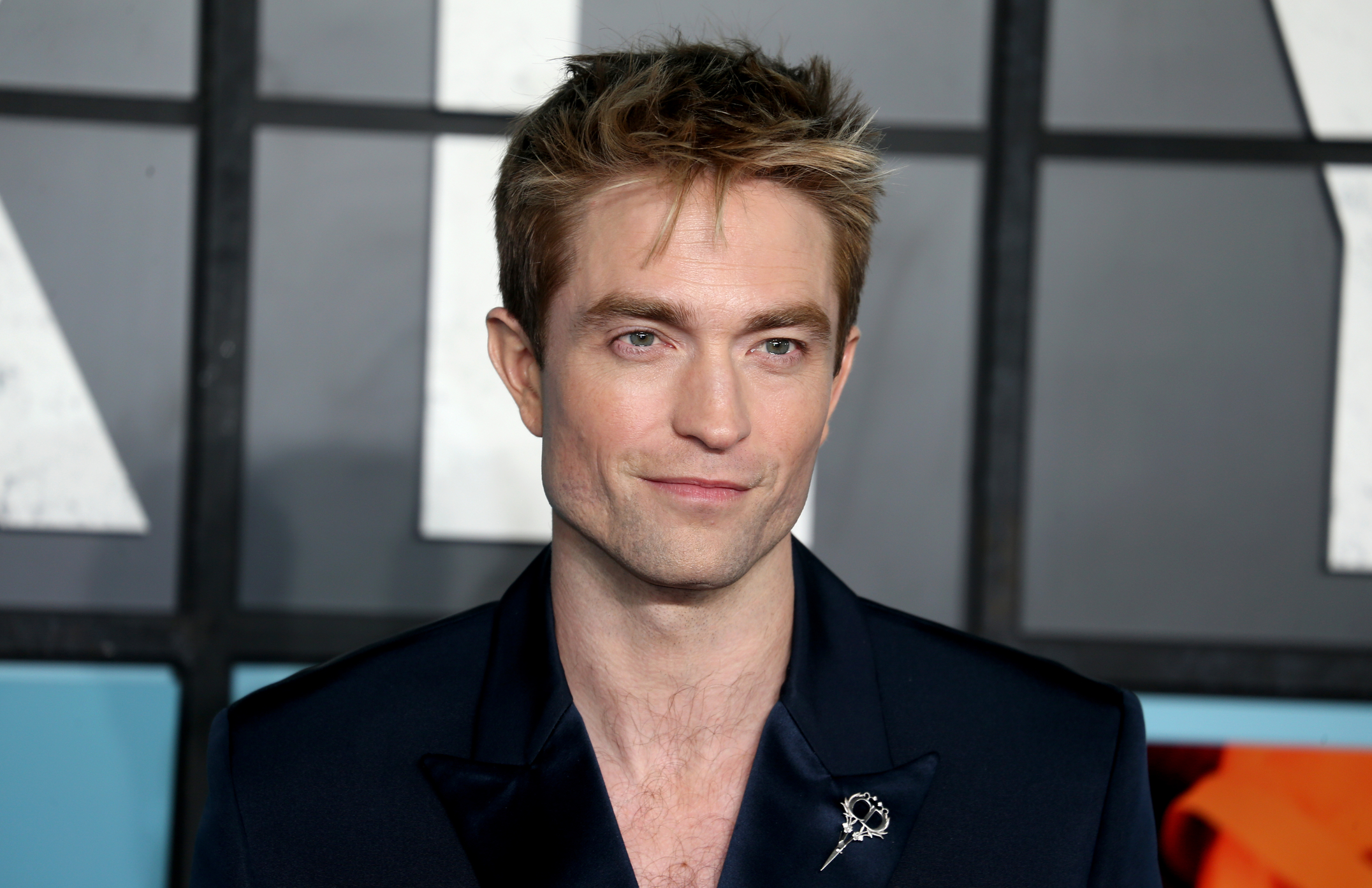
Every official James Bond film since the first, Dr No in 1962, has ended with the same promise: James Bond will return (in the early days, that announcement was usually accompanied by the name of the next film. That was easy back then, when there were still plenty of Ian Fleming’s original novels to adapt). What has never been announced in the closing credits of one film is who will be playing Bond in the opening credits of the next (although we often know that it will be a different actor). This week, Amazon MGM Studios, which these days owns the Bond franchise, announced that Robert Pattinson, a Londoner best known (depending on your age) as a vampire or Batman, would become the seventh actor to play the world’s best-known secret agent in the canonical series (David Niven, for what it’s worth, played 007 in the 1967 spoof Casino Royale, which nobody really counts, while Sean Connery returned for 1983’s Never Say Never Again, which few count either).
The Bond franchise has had plenty of practice at this kind of reinvention, going back as far as the summer of 1966, when Connery, filming You Only Live Twice in Japan (at the time his fifth outing) became fed up with the attentions of the local press (who hounded him from the moment he arrived), something that helped persuade him that he had had enough. Connery had also reportedly fallen out with Albert ‘Cubby’ Broccoli, one of the two producers, and was increasingly concerned about being typecast as Bond for the rest of his career (he was still only 36). His decision to retire from the Bond films was made official in July 1967. Broccoli later said that never fought to retain “a reluctant performer”.
At the time, the loss of Connery appeared to be madness, placing a hugely successful franchise (not that the word was used back then) in jeopardy (1965’s Thunderball was, adjusted for inflation, a billion US dollars film). For most cinemagoers Connery was Bond, and irreplaceable, and initially he was, rather. His replacement, George Lazenby, was an Australian model with very limited acting experience, and although his one Bond film, On Her Majesty’s Secret Service, did not perform as well at the box office as Connery’s films, it was still a success and has aged well, often cited as one of Bond’s more cerebral outings. Contrary to popular belief, Lazenby was not sacked: he chose to walk away, having been persuaded by his agent that Bond as a character was a busted flush. Oh dear. “Had he done more, Lazenby might have become a favourite,” wrote The Guardian’s film critic Peter Bradshaw in 2018.
For a then-record fee, Connery was recalled for 1971’s Diamonds Are Forever (the fee was donated to charity), but by then Bond’s producers knew that they were on to something, and that by reinventing the role they could refresh, renew, and sustain interest in a character who was anything but a busted flush. Roger Moore was handed the role and rather than asking him to impersonate his predecessors, Broccoli and associates completely revamped the character around Moore’s suave persona, already well-crafted in two television series, The Persuaders and The Saint. Interestingly, Moore was already 45 when he first played Bond. Tom Mankiewicz, who wrote Moore’s first Bond film, Live and Let Die, made 007 much more witty and generally lighter. Not a few Bond purists were aghast at the transformation, but the film took around 161 million US dollars at the box office, more than Diamonds Are Forever, and Moore ended up making a further six films, his last when he was fast approaching 60 (A View to a Kill, by which stage he was playing Bond almost exclusively for laughs).
James Bond has become a lesson in seamless reinvention.
Timothy Dalton then returned Bond to a far darker place (and a lot closer to Fleming’s original) for two films before a legal hiatus of six years meant that he was a little too old to continue when the franchise returned in 1995. Pierce Brosnan was by then the latest Bond, a mix of Connery and Dalton’s sheer ruthlessness with an eyebrow or two always ready to be raised in honour of Moore’s light-heartedness.
Bond’s most radical reinvention came in 2005 when Daniel Craig was revealed as the next 007, so much so that the Daily Mirror ran his photograph under a headline calling him James Bland (other headlines dubbed him James Blond). Craig was indeed different, and played Bond as a blunt instrument who didn’t think a great deal of anyone or anything, and who bled, sulked and (on occasion) came off second best. He was a massive hit, but then by and large they have all been hits. The 25 official films have, by one count, taken some 7.67 billion US dollars at the box office, before any adjustments for inflation.
James Bond has become a lesson in seamless reinvention. While a couple of things remain sacred (the opening credits, the theme tune, the gadgets) almost everything else, from tone to politics to how much fun 007 is allowed to be, is open to interpretation. Even M, for decades a man, was for a time recast as a woman. And it’s worth noting that arguably the biggest change of all (Brosnan to Craig) came off the back of Die Another Day, to that point the highest-grossing Bond film. Most organisations do it the other way round, protecting whatever works (usually a flagship product beloved of a founder) until forced into a change by numbers heading in the wrong direction, by which point it is often too late.
Denis Villeneuve, the director of the as yet untitled next Bond (which will likely appear on screens in 2028), said this week that Pattinson has “the timeless soul of 007 and brings a spirit that is completely new”, which is arguably precisely what a 64-year-old franchise needs. What Pattinson, who is 40, actually does with Bond remains to be seen. Whatever happens, James Bond will return.
Craig Turp-Balazs is head of insight and analysis at Reinvantage.