Europe's Carmakers
Parking restrictions
Some trade intervention can be useful, but only if it’s part of a much broader reinvention strategy
Earlier this month the European Union agreed a deal with China that will reduce the number of some electric vehicles being imported into the bloc by half, the EU’s latest attempt to protect its automotive sector. Brussels already imposes tariffs of up to 45.3 per cent on Chinese-made electric vehicles, made up of a 35.3 per cent ‘anti-subsidy’ tariff and its standard 10 per cent charge on cars not produced in the EU. Some Chinese manufacturers benefit from lower, preferential tariffs, while there are full exemptions for some models assembled by European carmakers in China.
Unlike the tariffs (introduced in 2024) which have had little impact (indeed, Chinese brands captured a record 15 per cent share of Europe's pure electric vehicle market in the second quarter of 2026, up from 9.5 per cent in early 2024), the new deal caps the number of plug-in hybrids which can be imported from China to the EU at 350,000 in 2027, down from an expected 800,000 this year. As part of the deal, China has in turn agreed to drop some tariffs on auto parts and cut duties by half on footwear, olive oil, and ice-cream originating in the EU.
All well and good, but as the failure of tariffs has proven, limiting the number of Chinese cars which can be sold in the EU will not rescue its carmakers. Some trade intervention can at times be useful, but only if it’s part of a much broader reinvention strategy. And at most of Europe’s carmakers, there’s no sign of that, at least not yet.
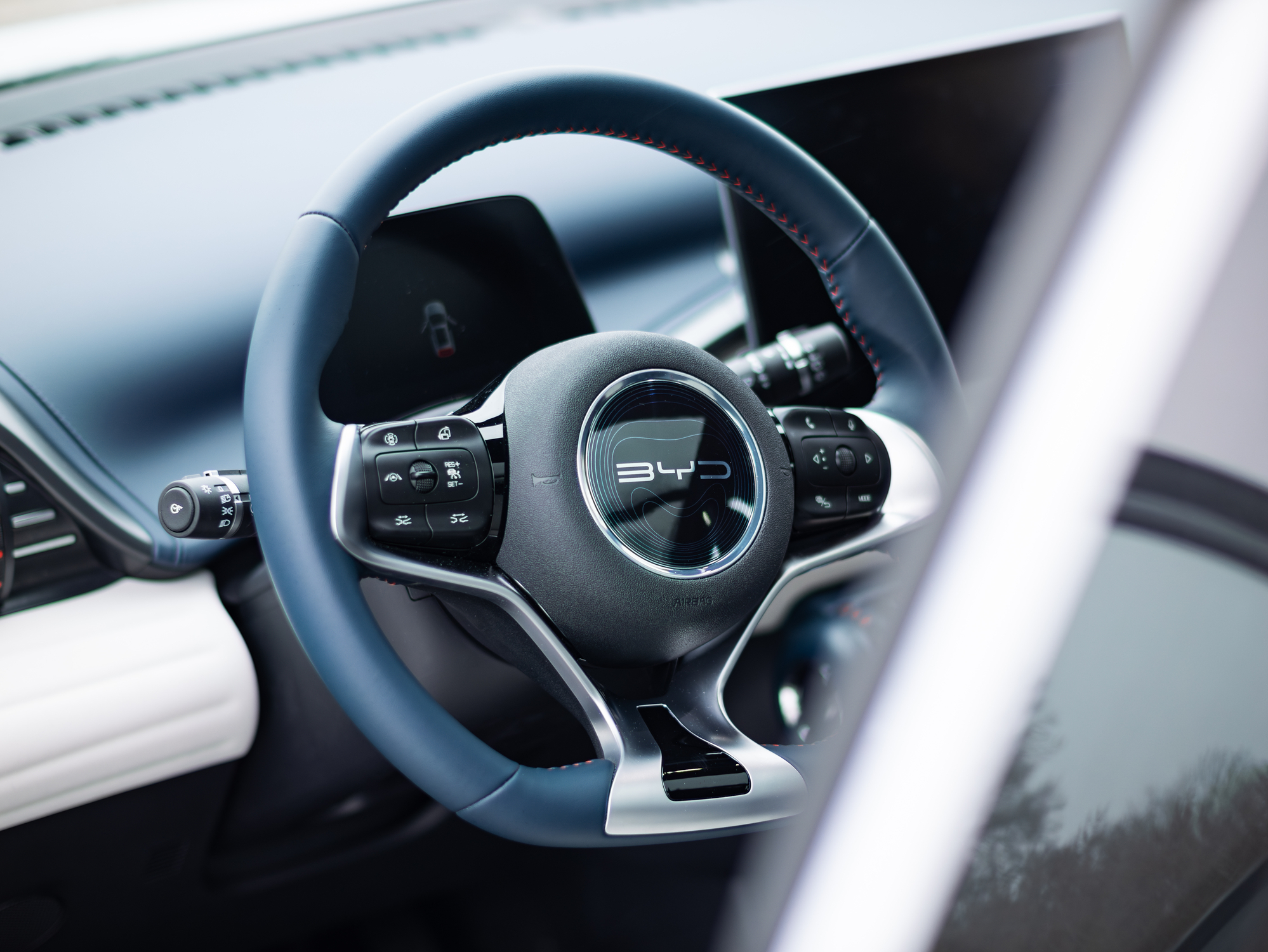
Indeed, it might well be argued that it is the Chinese who are adapting faster. The quota applies to hybrids shipped from China, while those built by Chinese firms inside the EU do not count towards it at all. Speaking at the Paris Motor Show on October 12, Stella Li, BYD’s executive vice-president, said the company’s plant in Szeged, in southern Hungary, was in the final stages of preparation for mass production which is set to begin by the end of this year. Szeged might well be running a year behind schedule (it was supposed to be building the Dolphin Surf, a small and very cheap electric hatchback, by the end of 2025) but it will be online soon enough, and later models are set to include the Seal U, whose plug-in hybrid version has been one of BYD’s best-sellers (of many) in Europe.
Nor, it should be pointed out, is BYD an exception. The most eager helpers, in fact, of Chinese car firms are Europe’s own, several of which these days have far more capacity than they know what to do with. Earlier this month Leapmotor, a Chinese firm in which Stellantis (Fiat, Citroën, Peugeot—amongst others) owns roughly a fifth, announced that its B10 SUV had started rolling off the line at a Stellantis plant near Zaragoza, in Spain. In May Stellantis also signed a preliminary deal to build cars for Dongfeng (another Chinese carmaker, and an old partner) at its underused factory in Rennes, France. In Barcelona, Chery should start production at a former Nissan plant it runs jointly with Ebro (a Spanish brand dormant from 1987 until 2024) at the end of this year or early next, according to Rafael Ruiz, Ebro’s chairman.
These moves have caught Brussels offside. In March, Stéphane Séjourné, the commissioner in charge of industrial strategy, unveiled the Industrial Accelerator Act, under which cars would qualify for subsidies and public contracts only if assembled in the EU with 70 per cent of their components (by value, with batteries excluded) made in Europe. A Hungarian-built BYD made up of primarily Chinese parts could struggle to qualify. But the rules cover only subsidies and procurement, and carmakers will by and large be trusted to declare their own compliance.
Shanghai surprise
None of this, however, really makes a dent in dealing with the biggest problem, which is that European cars cost too much to make. In a memo to staff in July Oliver Blume, Volkswagen’s boss, admitted a cost disadvantage of about 20 per cent against competitors (and mused about building the models it sells in China in Germany instead, to fill plants with no work lined up beyond 2030). In September, Volkswagen cut its forecast for this year’s operating margin to no more than one per cent, from between four and 5.5 per cent, after ten billion euros of one-off charges, six billion of them a writedown on Porsche. Earlier that month it had agreed with its unions to double planned job cuts to 100,000 worldwide, with Arno Antlitz, its finance chief, saying (a little late, perhaps) that, “We have no time to lose”.
Renault did not ask Brussels to keep the Chinese out, it borrowed their engineers, more or less, and learnt how to build a cheap car quickly in the process.
Renault offers a rather better template, and, like the cars it increasingly competes with, it came from Shanghai. Its new electric Twingo was developed in two years at the firm’s research centre in China, uses cheap batteries from CATL (a Chinese giant) and is assembled in Novo Mesto, Slovenia, for under 20,000 euros (the electric Mégane, in contrast took four). Renault did not ask Brussels to keep the Chinese out, it borrowed their engineers, more or less, and learnt how to build a cheap car quickly in the process.
Protection, as it sometimes can, has done some good, to be fair. According to Transport & Environment, a green think-tank in Brussels, European brands accounted for 23 per cent of electric cars imported from China in the first quarter of 2026, down from 38 per cent in 2024, which it credits to firms moving production home. That is the sort of breathing space genuine reinvention needs, provided it is actually spent on reinventing. Sigrid de Vries, head of the European Automobile Manufacturers’ Association (ACEA), a carmakers’ lobby, greeted the hybrid deal warmly, warning of price wars mirroring those in China (which European drivers might, on balance, rather enjoy).
The byline Reinvantage Insight is used to denote articles to which several members of the Reinvantage insight and analysis team may have contributed.